Cookware bottom technologies play a significant role in the overall cooking performance. Different bottom designs affect heat conduction, even heating, and the final texture and flavor of food. In this article, we will explain how various cookware bottom technologies impact cooking outcomes, backed by scientific data and expert reports, helping you make an informed decision when choosing cookware.
Common Cookware Bottom Technologies and Their Characteristics
1. Single-Layer Bottom Cookware: Ideal for Basic Cooking
Single-layer bottom cookware is relatively common and typically made of aluminum or stainless steel. The main characteristic of this cookware is that it has a single layer of metal, which heats up quickly but may not distribute heat evenly. This type is ideal for quick stir-frying and cooking foods that don't require precise temperature control.
According to a study published in the Journal of Food Science, single-layer bottom cookware tends to create hot spots at high temperatures, which can cause uneven cooking, leading to burnt or undercooked food.
2. Multi-Layer Composite Bottom Cookware: Even Heating for Better Results
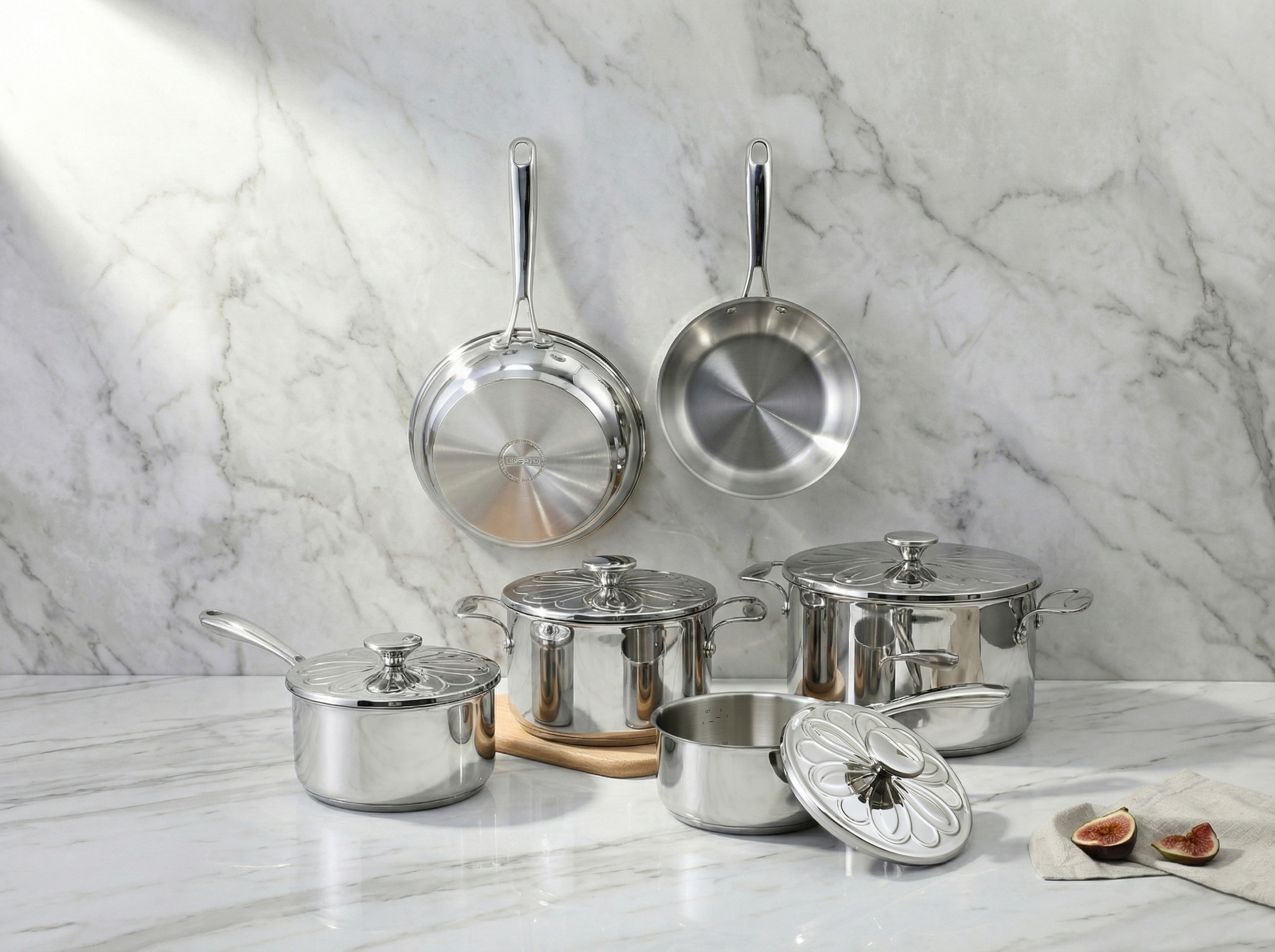
Multi-layer composite bottom cookware is one of the most popular options in modern kitchens. This cookware consists of multiple layers of different metals, such as aluminum, stainless steel, and copper. The multi-layer design ensures more even heat distribution and better cooking results.
A report from Culinary Technology Research indicates that composite-bottom cookware can significantly improve heat efficiency, reducing hot spots and ensuring that food cooks more evenly. For example, cookware made with stainless steel and aluminum composites can offer precise temperature control, keeping the food's flavor intact.
3. Forged Bottom Cookware: Durability and High-Temperature Cooking
Forged cookware is made from high-strength materials such as aluminum or stainless steel, which are heated and shaped under intense pressure. This results in a thicker, more durable bottom that provides even heat distribution, making it perfect for high-heat cooking methods like searing and frying.
The Journal of Metal Engineering reports that forged cookware is ideal for high-temperature cooking due to its uniform heat distribution and resistance to warping, which helps retain moisture in food and prevent nutrient loss.
4. Induction-Ready Bottom Cookware: Perfect for Modern Kitchens
With the increasing popularity of induction cooktops, induction-ready cookware has become essential. These pots and pans have a magnetic layer at the bottom, often made of cast iron or magnetic stainless steel, to interact with the electromagnetic field and provide rapid heating.
According to a study by the International Electromagnetic Society, cookware designed for induction cooking offers significant advantages in energy efficiency and faster heat-up times, making it an ideal choice for induction stoves.
How Cookware Bottom Technology Affects Cooking Performance
Heat Conduction and Food Texture
The heat conduction of cookware directly impacts the texture of the food. Even heat distribution prevents food from being overcooked in some areas and undercooked in others. Different cookware bottom technologies affect heat conduction differently.
For example, composite bottom cookware, with its multi-metal layers, improves heat distribution significantly. Scientific tests show that this type of cookware provides about twice the heat conduction efficiency compared to pure stainless steel, which helps prevent food from burning.
Durability and Heat Stability
Durability and heat stability are also important factors to consider when choosing cookware. The bottom technology determines how well the cookware can withstand prolonged exposure to heat and resist deformation over time.
For example, forged cookware lasts 30% longer than aluminum-bottom cookware, according to findings in Food Engineering Research. Forged pans are much more stable under high heat, making them perfect for tasks like pan-frying or searing.
Environmental and Health Impact of Cookware Bottom Technologies
Beyond cooking performance, the environmental impact and safety of cookware are becoming increasingly important. Most modern cookware features non-toxic, food-safe coatings to avoid contamination.
A report by Environmental Cooking Equipment Research found that poorly coated cookware can release harmful chemicals, posing a potential health risk. Choosing cookware with certified eco-friendly materials ensures a safer cooking experience.
How to Choose the Right Cookware Bottom Technology
The choice of cookware bottom technology depends on your cooking needs. If you primarily cook basic meals, single-layer bottom cookware may be sufficient. However, for better heat control and even cooking, multi-layer composite cookware is an ideal choice.
Choosing Tips:
For Everyday Home Cooking: Multi-layer composite cookware is the most versatile, offering even heat distribution and wide usage.
For High-Temperature Cooking: Forged cookware is the best choice, offering durability and heat resistance.
For Induction Cooktops: Opt for magnetic stainless steel or cast iron bottom cookware for maximum heat efficiency.
FAQ: Frequently Asked Questions About Cookware Bottom Technologies
1. What is multi-layer composite cookware?
Multi-layer composite cookware consists of layers of different metals, such as stainless steel, aluminum, or copper, that work together to provide even heat distribution and better cooking performance.
2. How does forged cookware differ from regular cookware?
Forged cookware is made by applying heat and pressure to metal, resulting in thicker, more durable cookware with improved heat stability. It is particularly ideal for high-temperature cooking.
3. What is induction-ready cookware?
Induction-ready cookware is designed with a magnetic layer at the bottom, allowing it to work efficiently with induction cooktops. The magnetic field heats the cookware directly, providing faster cooking times.
4. How do I maintain the bottom of my cookware?
Avoid heating cookware without food inside, as this can damage the bottom. Regularly clean the base with non-abrasive tools, and avoid harsh chemicals that can degrade the material.
Conclusion:
Understanding the impact of cookware bottom technology on cooking performance can significantly enhance your cooking experience. By considering factors such as heat conduction, durability, and cooking methods, you can select the perfect cookware for your kitchen needs. We hope this guide helps you make an informed decision about the cookware that's best suited to your culinary requirements.
Cookware
Heat Conduction
Multi-Layer Composite
 English


