Key Considerations for Retailers, Wholesalers, and Commercial Buyers
When sourcing high-quality stainless steel salad mixing bowls for your business, whether you are a retailer, wholesaler, or private-label brand, it’s essential to focus on specific features like material quality, thickness, weight, and hardness. These factors not only affect the durability and performance of the product but also have a direct impact on your bottom line.
This professional guide will help you make informed decisions when purchasing stainless steel salad mixing bowls, ensuring they meet the highest standards for durability, safety, and commercial use.
Why Stainless Steel Salad Mixing Bowls Are Important for Your Business
Stainless steel salad mixing bowls are widely used in restaurants, catering services, and commercial kitchens due to their superior durability, resistance to corrosion, and ease of maintenance. But choosing the right one for your business requires more than just selecting a product that looks good. Considerations such as the material grade, thickness, and weight will determine the useful life, customer satisfaction, and after-sales cost.
When sourcing stainless steel salad mixing bowls, it is important to ensure that the materials and construction are reliable enough for daily use and that they will stand up to the rigors of both retail and wholesale environments.
Key Factors to Consider When Buying Stainless Steel Salad Mixing Bowls
1. Material Quality: Why Stainless Steel Matters
The most important factor in choosing a high-quality salad mixing bowl is the material. Stainless steel is ideal for foodservice applications because of its corrosion resistance, strength, and non-reactivity. High-quality stainless steel ensures that the bowls will not corrode or rust and will not leach harmful chemicals into the food.
Material Grades to Consider:
304 Stainless Steel: This grade is commonly used in foodservice and high-end retail products due to its excellent corrosion resistance and non-reactivity. It is ideal for salad mixing bowls as it can withstand exposure to acidic foods.
201 Stainless Steel: A more cost-effective option but has slightly lower resistance to corrosion. It is a suitable choice for entry-level products but may not last as long.
Tip: Always look for 304 stainless steel for long-term use and food safety.
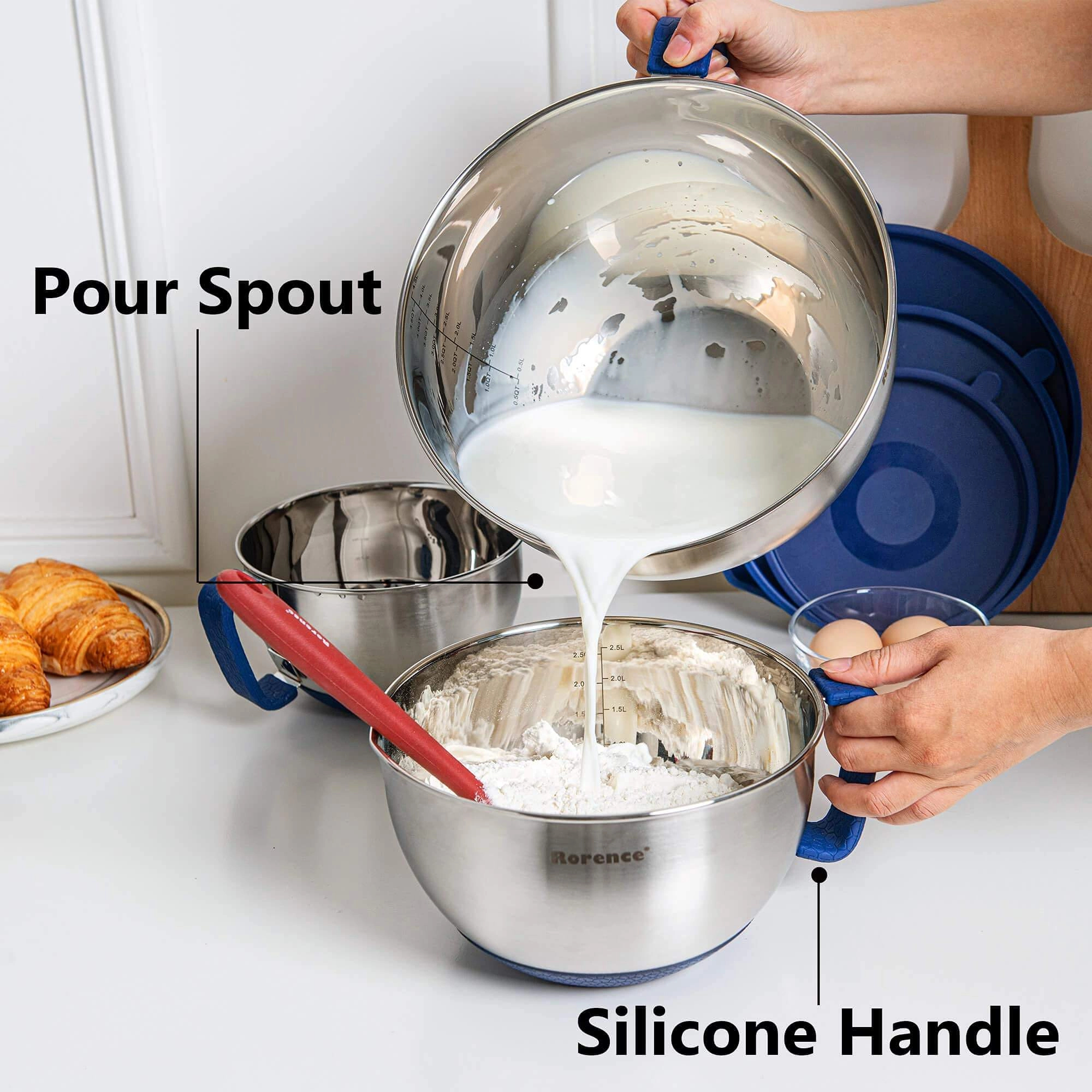
→Stainless Steel Salad Mixing Bowl With Handle
2. Thickness: Impact on Durability and Feel
The thickness of the stainless steel is another critical factor that affects the durability and premium feel of the salad mixing bowl. Thicker bowls provide greater strength, are more resistant to dents, and last longer than thinner alternatives.
Ideal Thickness Range:
0.5mm to 1mm: Suitable for light-duty commercial use, providing a balance of cost and durability.
The cheapest salad mixing bowl on the market is 0.35mm thick.
Better resistance to dents and scratches
Longer service life with minimal degradation
| Gauge | Approx. Thickness (mm) | Best For | Red Flags |
| 24 | 0.56 | Light-duty serving, travel, or decorative use | Warping under heat; visible flex when holding full |
| 22 | 0.65 | Home kitchens with moderate use | May dent with metal spoons; not ideal for mixer attachments |
| 20 | 0.81 | Daily cooking, baking, and meal prep | Rare—often mislabeled as “heavy-duty” by retailers |
| 18 | 1.22 | Commercial kitchens, high-volume prep, induction-compatible use | Heavy for prolonged hand use; may require two hands when full |
→Thickness Matters More Than You Think
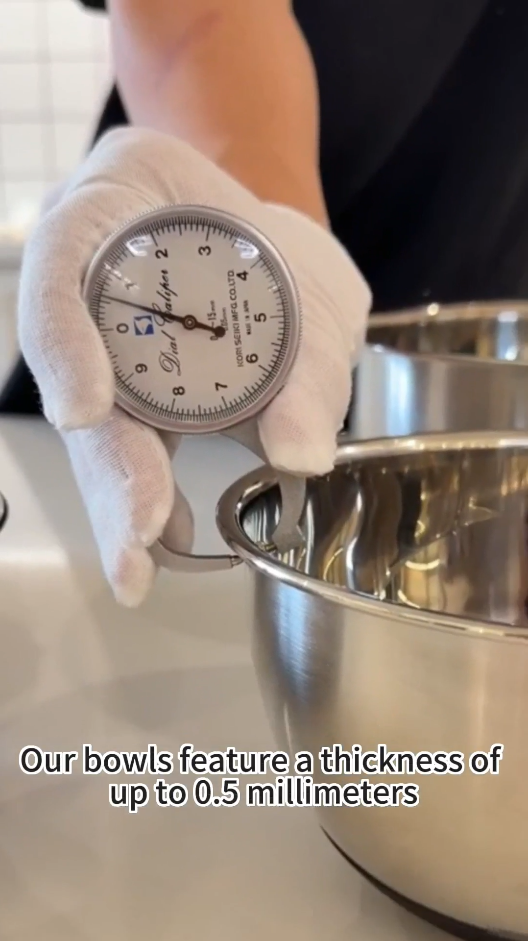
→We gave both stainless steel bowls a good whack... and were stunned by the result!
3. Weight: The Role of Weight in Stability and Durability
The weight of a stainless steel salad mixing bowl affects both its stability and durability. A heavier bowl is less likely to tip over during use, making it a better choice for both mixing and serving. Additionally, weight often correlates with the perceived value of the product.
Why Weight Matters:
Ideal Weight Range:
For light-duty commercial use, medium weight (around 300–500 grams) is sufficient.
For high-end or professional use, choose heavier bowls (over 500 grams) for better stability and durability.
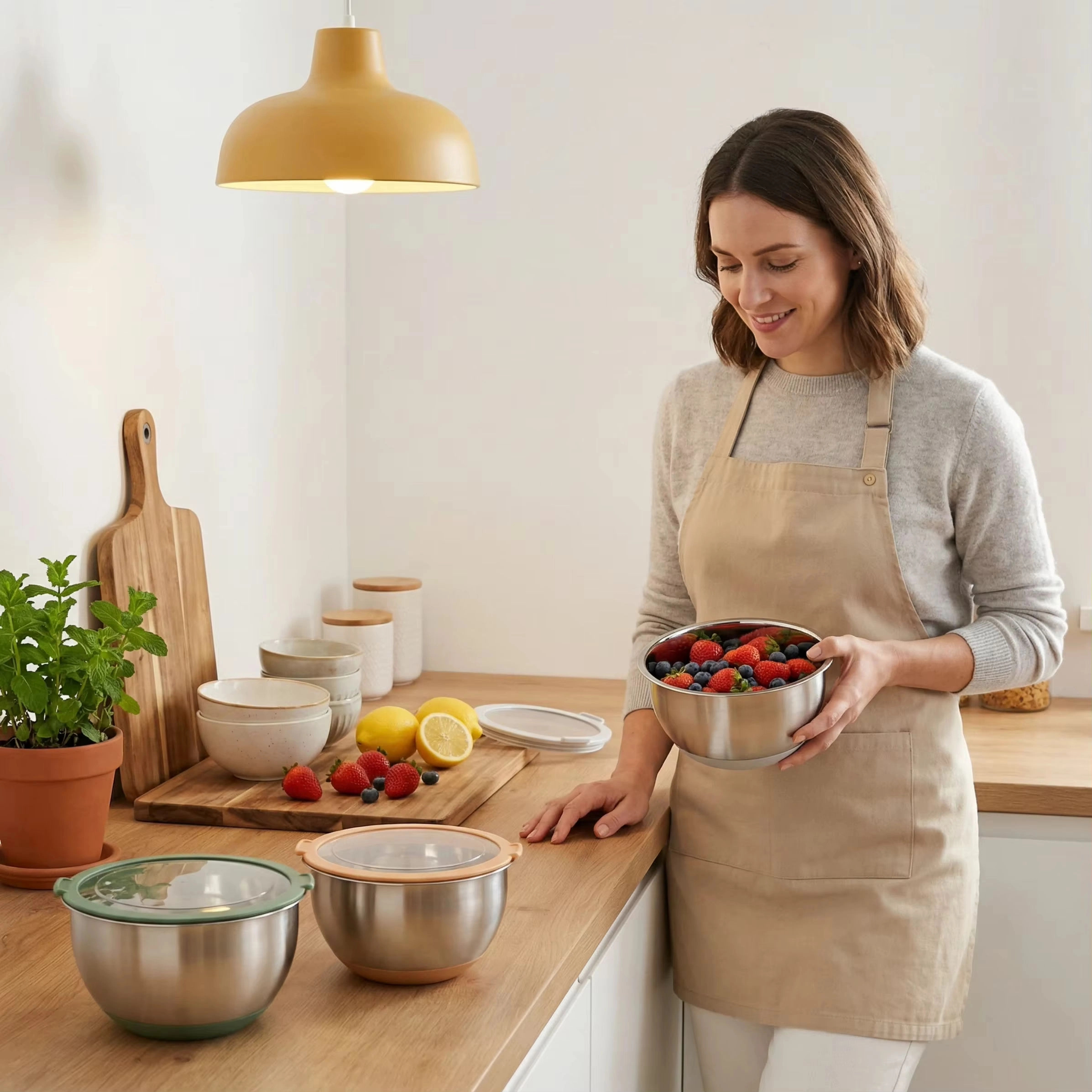
→Stainless Steel Mixing Bowls Set with Transparent Lids
4. Hardness: The Importance of Steel Hardness in Wear Resistance
The hardness of stainless steel is an important consideration as it affects the resistance to scratches and overall wear. Higher hardness steel is more resistant to damage, making it ideal for environments with frequent use.
Why Hardness Is Key:
Harder steel means better resistance to scratching and longer durability.
Hardness is measured on the Rockwell scale, with higher numbers indicating harder, more durable steel.
For commercial-grade products, harder stainless steel is recommended to ensure the bowls last longer and maintain their appearance.
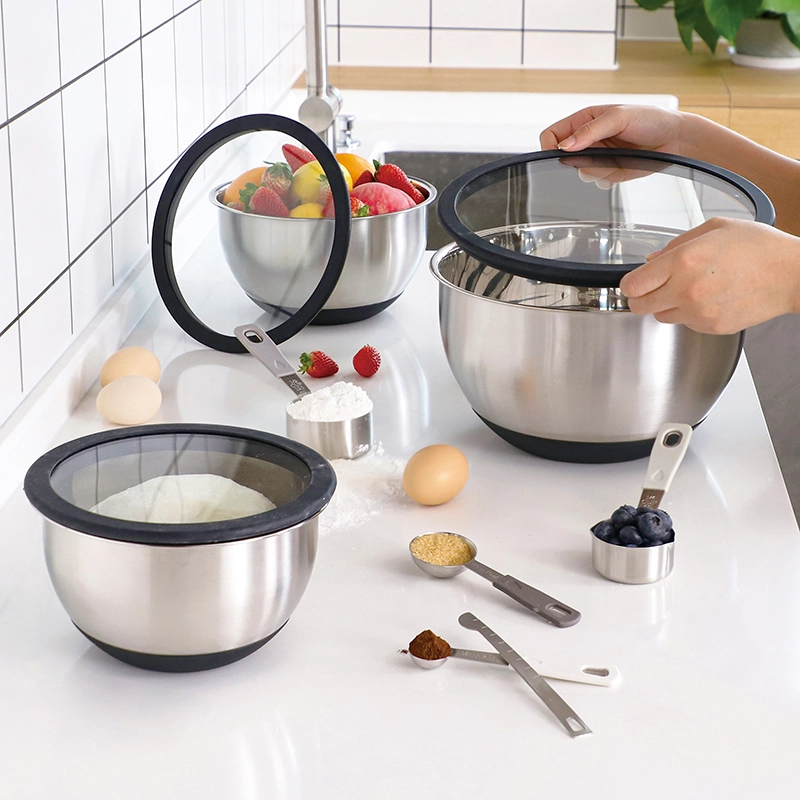
→Stainless Steel Mixing Bowl With Glass Lid
5. Quality Assurance & Certifications
Before making a large order, ensure that the stainless steel salad mixing bowls you’re buying are FDA-approved, LFGB-compliant, and come with the necessary quality certifications. These certifications guarantee the safety and durability of the bowls.
Look for:
FDA Certification for food safety.
LFGB Compliance for European markets.
ISO Certification for manufacturing quality.
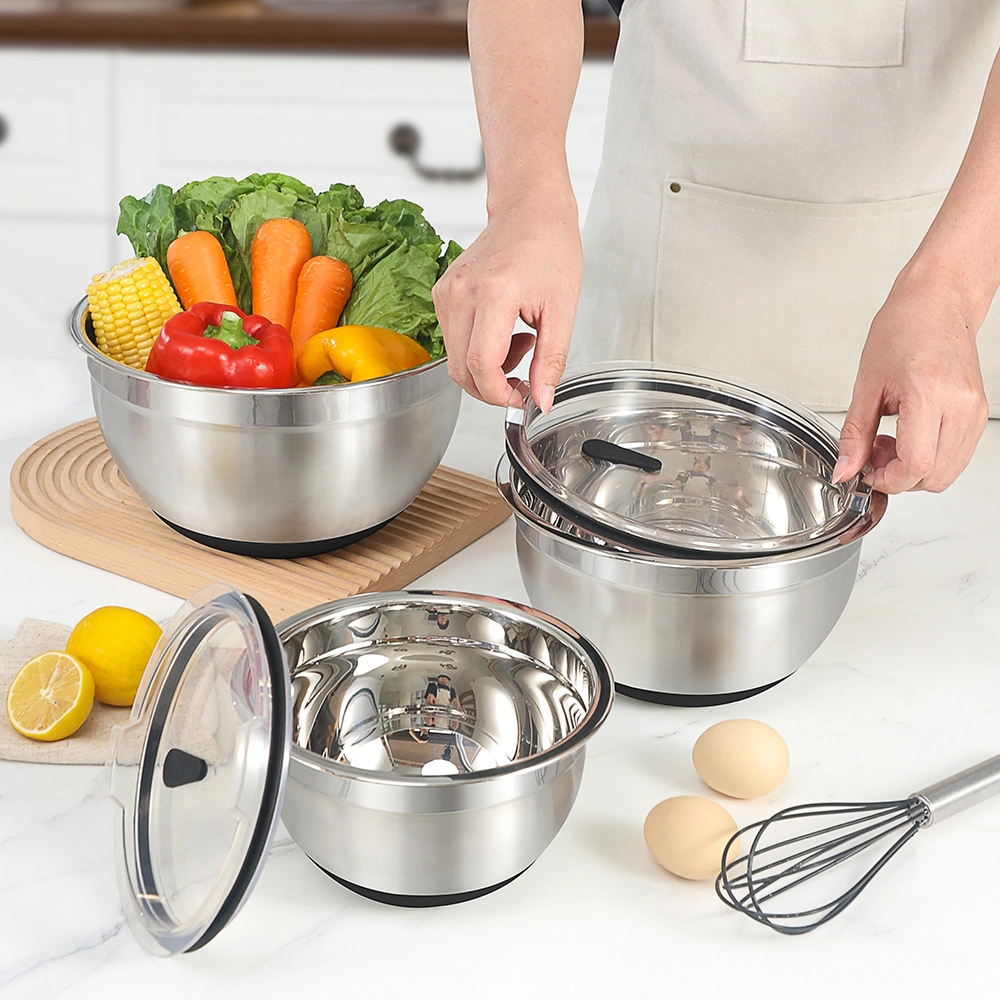
→Stainless Steel Mixing Bowl Set with Transparent Lids
6.Real-World Case Study: The Bakery Owner Who Switched Bowls
When Maya Rodriguez opened Hearth & Rye Bakery in Portland, she bought 12 inexpensive 22-gauge stainless bowls—$14 each, sold as “commercial grade.” Within three months, five had developed hairline cracks near the base from repeated contact with her Hobart mixer’s beater. Two others warped after being left inverted on a hot stainless counter post-cleaning. She replaced them with 20-gauge, electropolished bowls from a local metalworks supplier ($42 each), specifying rolled rims and laser-etched bases. Over the next 27 months, not a single bowl cracked, dented, or lost its luster—even after daily exposure to vinegar-based cleaners, citrus glazes, and dishwasher cycles. Her labor savings alone—no time spent replacing or wrestling stuck bowls—paid for the upgrade in under four months.
→Real-World Case Study: The Bakery Owner Who Switched Bowls
Key Takeaways for Retail and Wholesale Buyers
When buying stainless steel salad mixing bowls for your business, consider the following:
Material Quality: Prefer 304 stainless steel for its superior corrosion resistance and durability.
Thickness: Thicker bowls last longer and feel more premium.
Weight: Heavier bowls provide better stability and durability.
Hardness: Choose harder steel for better scratch resistance and longer service life.
Certifications: Ensure that the bowls meet FDA and LFGB standards.
At Wintop Houseware, we offer high-quality, durable stainless steel salad mixing bowls suitable for a range of commercial applications, from retail to catering businesses.
Looking for premium stainless steel salad mixing bowls for your business? Contact Wintop Houseware today! We provide OEM/ODM solutions and bulk orders for retailers and wholesalers worldwide.
→ Contact us to develop long-lasting, market-ready mixingbow for your wholesale or retail program.
Stainless Steel Salad Mixing Bowl
Salad Mixing Bowl DurabilityO
EM Salad Mixing Bowl Manufacturer
Stainless Steel Salad Mixing Bowl Commercial Salad Mixing Bowls Salad Mixing Bowl Durability High-Quality Salad Mixing Bowls Stainless Steel Material Quality Salad Mixing Bowl Thickness Salad Mixing Bowl Weight Salad Mixing Bowl Hardness Stainless Steel Salad Bowls Supplier OEM Salad Mixing Bowl Manufacturer
 English


